Five-year Action Plan update

.webp)
Introduction
The Premier League launched its No Room For Racism Action Plan in 2021, building on longstanding work and the existing No Room For Racism initiative established two years before. Since then, five years of action has driven progress across six key pillars: action against racism, coaching pathways, executive pathways, playing pathways, community support and embedding equality.
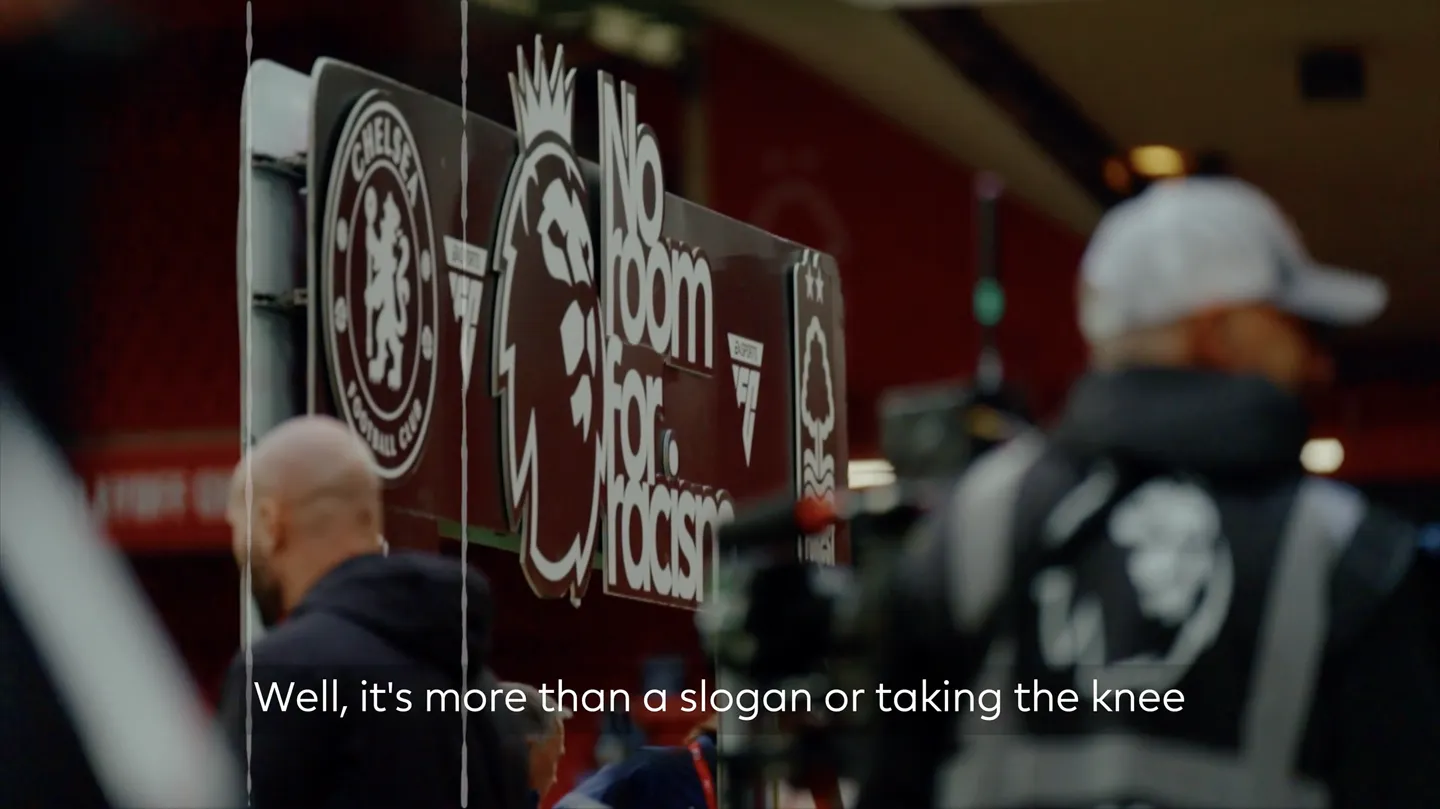
No Room For Racism remains a prominent message for the Premier League, displayed throughout the season. As the five-year update on the Action Plan is published, the Premier League reiterates its long-term commitment to tackling discrimination and increasing diversity across football.
"I am proud of the real progress that our No Room For Racism Action Plan has made across a range of important areas over the last five years. We are wholly committed to increasing opportunities for people from under-represented groups and tackling racism wherever it happens in our game."
Longstanding work
Since its inception, the Premier League has been proudly strengthened by its diversity, with 128 nationalities represented on the pitch to date.
The League has worked alongside anti-discrimination bodies, such as Kick It Out, since its inaugural season in 1992/93.
In 2015, the Premier League Equality, Diversity and Inclusion Standard (initially named the Equality Standard) was established with the aim of supporting clubs to embed equality, diversity and inclusion throughout their operations.
No Room For Racism launched in 2019 to highlight the League’s commitment to opposing racism within football – and two years later its work was structured into the No Room For Racism Action Plan.
Today, the Premier League remains staunchly opposed to discrimination in its stands and online, and proudly promotes equality, diversity and inclusion across football.
.webp)
Action against racism
%20(1).webp)
Tackling discrimination
The Premier League and our clubs are appalled that players continue to face discriminatory abuse, and we will continue to do everything in our power to stop it, wherever it happens.
The Premier League’s team of experts was established in 2019 to monitor and investigate online racist abuse. They work to identify and locate abusers, who could face custodial sentences, football banning orders, criminal records, fines, community orders or police-mandated educational programmes.
investigations conducted into online abuse by the Premier League’s dedicated team
.webp)
.webp)
.webp)
Developing coaching pathways
.webp)
Diversity in the dugouts
The Premier League is committed to creating greater access to opportunities and career progression for those from black, Asian and ethnically diverse backgrounds in football, and to addressing the historic under-representation of these groups in coaching.
In 2020, the League launched two main inclusive coaching programmes – which it still runs today.
.webp)
.webp)

Other initiatives
In 2021 the Premier League worked with other football bodies to develop the Coach Index, which enables more than 500 coaches from under-represented groups to identify career opportunities at 78 clubs. In 2024/25, the League’s Anti-Racist Coaching workshop followed, supporting Premier League and Category One Academies to facilitate culturally aware environments.
.webp)
coaches supported through inclusive schemes at 59 clubs
are now in full-time employment in professional football
coaches registered to the Coach Index, with 78 clubs signed-up

“We've done so much that I would have never been able to do by myself. The Premier League has actually opened us to a new world.”

.webp)


Enhancing executive pathways
.webp)
Developing pathways across football
The Premier League is committed to developing and maintaining a diverse workforce within its own organisation, as well as across football. A series of targets and initiatives are designed to support this ambition.
The Premier League has run a number of initiatives to help diversify the workforce across football since the No Room For Racism Action Plan launched in 2021.
Improving staff diversity
The Premier League’s No Room For Racism Action Plan set five-year targets to increase the diversity of our own workforce by 2026. The target of having 18 per cent of staff from ethnically diverse backgrounds by summer 2026 has been met early (19.6 per cent as of November 2025), along with having two ethnically diverse Board members. These targets are now being reviewed for 2031.
As part of its commitment to providing an open and transparent environment, the League published its workforce diversity data in 2025. All professional football clubs did so too for the first time under The FA’s Rule N. By sharing insights, clubs demonstrated a united approach to further shape the League’s ambitions to create and sustain inclusive communities, clubs and stadiums.
.webp)
Premier League Futures
Launched in 2022, Premier League Futures is a 12-month professional development programme designed to support current and former Academy and Women’s Super League Academy players to achieve success beyond their time in the system.
participants have completed Premier League Futures

Future Academy Leaders
Future Academy Leaders supports Premier League and EFL clubs with driving diversity in Academy leadership roles by developing individuals from under-represented backgrounds. Participants graduate with a Graduate Certificate in Football Leadership and Management.
“The FAL programme brings like-minded people together and provides a platform to build a network. It’s a vital tool for personal and professional growth.”
participants from under-represented backgrounds on Future Academy Leaders, with 40 per cent successfully securing new or more senior roles
.webp)
Black Participants Advisory Group
Established in 2019, Premier League’s Black Participants Advisory Group has brought together current and former players and managers from under-represented backgrounds with the aim of ensuring their voice is heard. The group was key to creating the Premier League's No Room For Racism Action Plan and advises the League on matters relating to race and ethnicity.
.webp)
Improving player and match official pathways
.webp)
Players
The Premier League is proud of its diversity on the pitch. But we are also committed to enabling further access for players of all backgrounds into the professional game.
The Premier League's effort to drive greater access to men’s and women’s football falls primarily into two initiatives: the South Asian Action Plan and FA Girls’ Emerging Talent Centres.
nationalities represented in the Premier League all-time
South Asian Action Plan
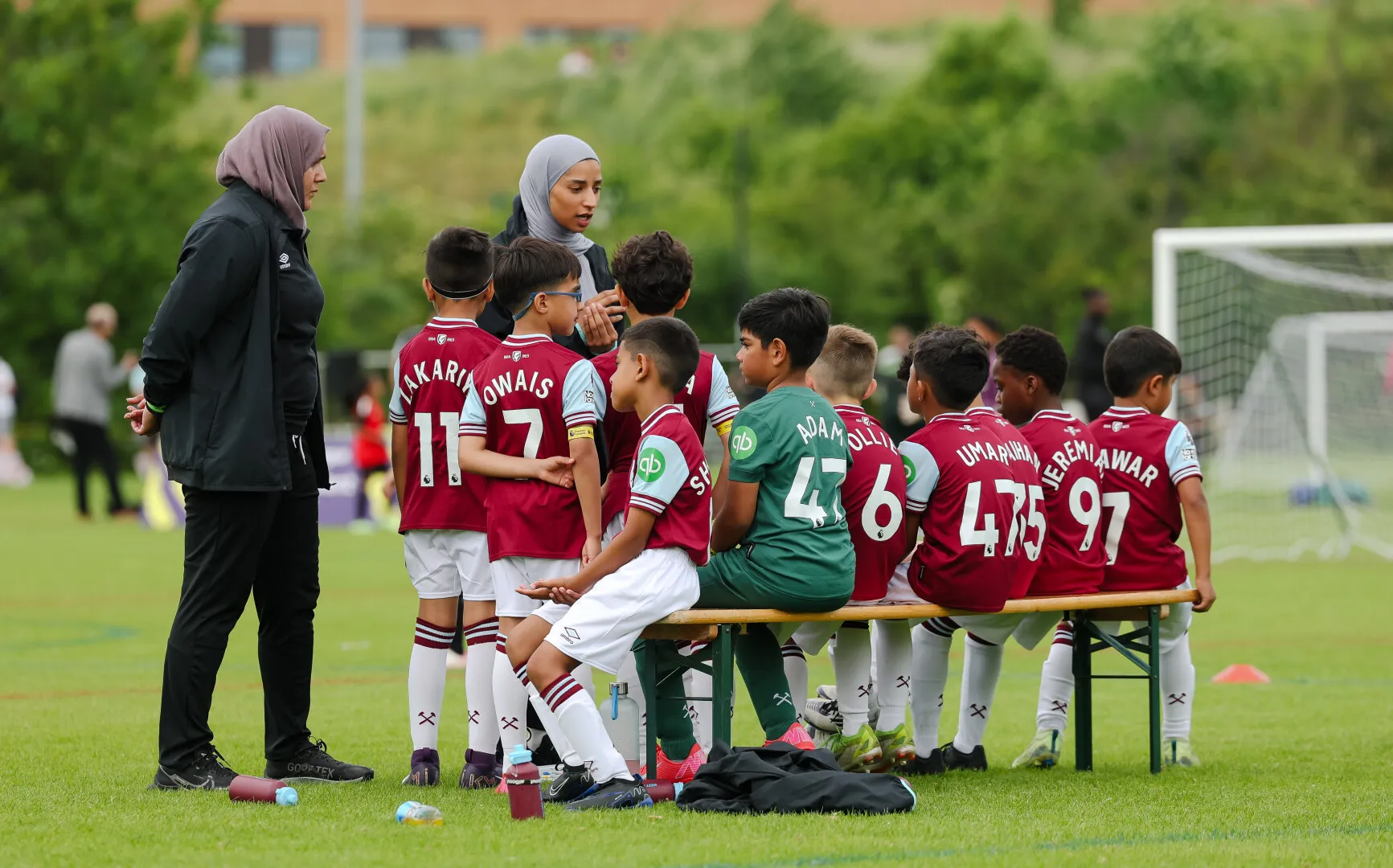
The South Asian Action Plan is a long-term initiative designed to address the under-representation of British South Asian players and staff within professional football. Launched in 2021, the plan focuses on supporting clubs establish talent pathways among pre-Academy aged children at grassroots level.
A central element of the programme is the Emerging Talent Festival, which brings together grassroots players, clubs and communities to create early talent identification opportunities. In its first inception the festival hosted two teams and has since expanded to 22, with more than 3,000 players and 840 coaches engaged since.
Of the 400 children who attended the 2025 festival, 46 were invited to club development centres.
players attending South Asian Action Plan Emerging Talent Festivals, growing from two teams in 2021 to 22 by 2025
South Asian Action Plan
The South Asian Action Plan is a long-term initiative designed to address the under-representation of British South Asian players and staff within professional football. Launched in 2021, the plan focuses on supporting clubs establish talent pathways among pre-Academy aged children at grassroots level.
A central element of the programme is the Emerging Talent Festival, which brings together grassroots players, clubs and communities to create early talent identification opportunities. In its first inception the festival hosted two teams and has since expanded to 22, with more than 3,000 players and 840 coaches engaged since.
Of the 400 children who attended the 2025 festival, 46 were invited to club development centres.
players attending South Asian Action Plan Emerging Talent Festivals, growing from two teams in 2021 to 22 by 2025

FA Girls’ Emerging Talent Centres
The Premier League funds 70 free FA Girls’ Emerging Talent Centres across the country, as part of its commitment to removing barriers to entry for girls. The centres aim to diversify the women and girls’ talent pathway through inclusive principles and better accessibility.
increase in players from ethnically under-represented groups since the ETCs began, almost doubling from 204 to 383. This represents an increase from 9.7 per cent to 13.4 per cent of the nationwide player pool
Match officials
The Elite Referee Development Plan (ERDP) is a long-term strategy funded by the Premier League, launched in 2022 to build a diverse pool of high-performing officials.
Professional game officials from black, Asian or mixed heritage backgrounds have doubled since the ERDP’s inception, driven in part by the ERDP-funded programme CORE X. This has led to six of the seven promotions of under-represented referees in the men’s professional game.
Representation is increasingly visible in the Premier League. Since the ERDP’s launch, we’ve seen Akil Howson promoted to the top-flight as an assistant referee, while Sam Allison became the first black referee to lead a Premier League match in 15 years. That progress has continued, with Farai Hallam receiving a number of Premier League appointments and Paul Howard progressing through an enhanced VAR training programme to now operate regularly as a VAR in the Premier League.
.webp)
Community support
.webp)
Nationwide education in communities
Education is a core part of the League’s approach to raising awareness about the strength of diversity and the harm caused by discrimination. The Premier League Foundation delivers League-funded programmes in areas of high ethnic diversity, as well as providing free No Room For Racism resources to primary schools across England and Wales.
The League’s flagship community programme, Premier League Kicks, celebrated its 20th anniversary in 2025/26, and provides access to free weekly football. Approximately 36 per cent of Premier League Kicks participants are from ethnically diverse backgrounds.
.webp)
children benefitting from free No Room For Racism resources
teachers using free No Room For Racism education resources
of Premier League Kicks participants from ethnically diverse backgrounds

In 2025, Year 6 student Michaela won a nationwide Premier League Primary Stars poetry-writing competition. Her powerful poem stood out in the League-wide initiative, centred on the theme ‘Greatness Comes From Everywhere, which highlights the importance of education and the Premier League’s ongoing commitment to tackling discrimination.
“My teachers and my family inspired me to write the poem because they teach me that there's no room for anyone to be racist.”
Embedding equality
.webp)
PLEDIS
The Premier League supports clubs to further embed equality, diversity and inclusion across their operations.
This work was formalised in 2015 with the Premier League Equality Standard, which developed into the Premier League Equality, Diversity and Inclusion Standard (PLEDIS) in 2021.
The PLEDIS is a systemic change framework that helps clubs set their EDI agendas and raise standards across the competition.
Every club in the League is supported through the PLEDIS, as well as those who are relegated from it. To date, 27 clubs operate within the framework, with 18 at Advanced level. The League achieved its own assessment at Preliminary level in March 2025 and has moved on to Intermediate level.
.webp)
Room for greatness